Bryson Fire Malibu: Property Damage & Insurance Claims | GCTA
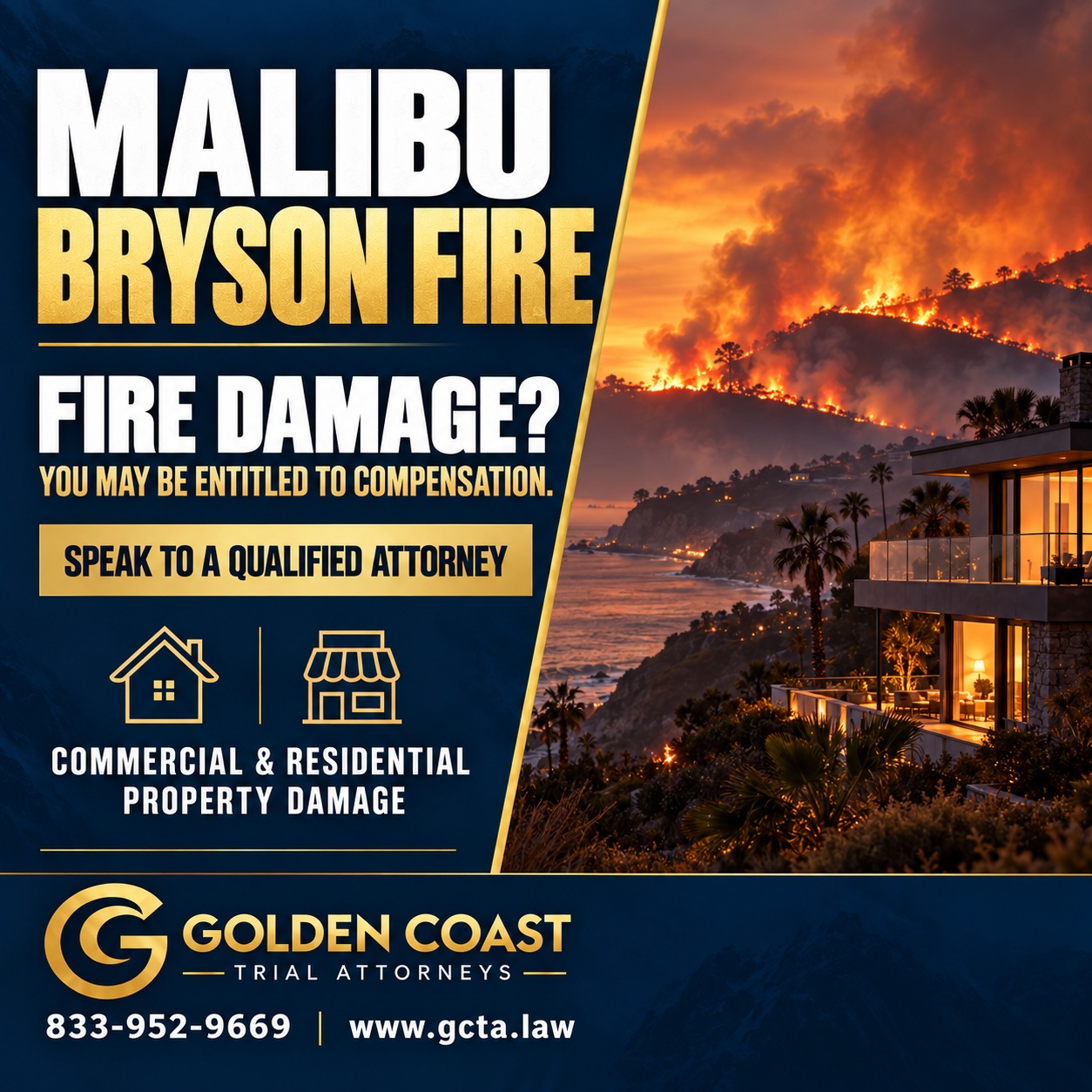
Bryson Fire in Malibu and What Property Owners Should Know
By Golden Coast Trial Attorneys, P.C.
Fire status referenced below: City of Malibu update dated October 16, 2026, at 10:15 a.m. Pacific. Check official alerts for subsequent changes.
The Bryson Fire has brought wildfire concerns back to western Malibu and the surrounding Santa Monica Mountains. For residents, the immediate priorities are staying safe, following evacuation instructions and keeping track of any expenses or suspected property damage.
In its October 16 morning update, the City of Malibu reported that the fire had burned 146 acres and was 17% contained. The city also reported that no structures had been lost or damaged at that time. Evacuation warnings remained in effect for western Malibu zones MAL-C113 and MAL-C114.
For homeowners and renters with questions about a potential loss, Golden Coast Trial Attorneys’ property damage practice can help assess insurance disputes, supporting documentation and possible next steps.
Key Takeaways
- The city reported no structural losses or damage in its October 16, 10:15 a.m. update; fire conditions and official assessments can change.
- Smoke and ash concerns should be documented and evaluated individually. Exposure alone does not establish a covered insurance loss.
- Evacuation and temporary housing benefits depend on your policy and the circumstances that required you to leave.
- Save photographs, receipts, inspection reports and insurer communications if you suspect a loss.
What Is Known About the Bryson Fire
On October 15, the city reported a brush fire near Encinal Canyon Road and Mulholland Highway north of Malibu. The following morning’s update described continuing evacuation warnings and closures affecting schools and city services.
Residents should use the City of Malibu Alert Center and Los Angeles County emergency notifications for current instructions. An evacuation warning is a signal to prepare; follow any evacuation order immediately. Do not delay leaving to photograph property or collect claim documents.
Can Smoke or Ash Affect a Home That Has Not Burned
A wildfire insurance claim can involve more than direct flame damage. Smoke, soot, ash and heat may affect a property or its contents, but the presence, extent and cause of any damage must be evaluated.
The California Department of Insurance’s smoke claim guidance emphasizes that insurers must investigate reported smoke damage rather than reject claims without an appropriate investigation. Whether a particular cleaning, testing or restoration expense is covered depends on the evidence and applicable policy provisions.
What to Document if You Suspect Property Damage
Once authorities allow access and it is safe to return, organize a record of what you observed. A useful claim file connects the condition of the property, the work proposed and the cost of addressing the loss.
Photograph affected areas
Capture the rooms, surfaces and belongings you believe were affected. Include wider views and close-ups, and keep original files with their dates.
Describe your observations
Record when you noticed smoke odors, residue or other changes. Include any earlier photographs that help show the property’s condition before the fire.
Request an inspection
Ask your insurer how it will evaluate the reported damage and whether qualified testing or a specialist assessment is needed. Keep inspection findings and itemized estimates.
Keep an inventory and receipts
List affected belongings and save purchase records, cleanup invoices and receipts for reasonable temporary measures. Photograph items before disposal when safe, while following official hazardous-material guidance.
Preserve claim communications
Keep the claim number, adjuster’s contact information, emails, letters and a dated call log. Ask for coverage decisions and the reasons for them in writing.
The Department of Insurance’s Residential Property Claims Guide also explains notice, temporary repairs, inspections and disputed estimates. Promptly report a suspected loss and review your policy’s requirements before extensive permanent repairs.
Will Insurance Pay for Evacuation or Temporary Housing
Additional living expense coverage, often called ALE, may help with necessary increases in living costs when a covered event makes a home uninhabitable. Depending on the policy and facts, this can include temporary housing and added meal or transportation expenses.
Some policies also provide benefits when a civil authority restricts access through a mandatory evacuation order. A warning or a voluntary departure does not automatically establish eligibility. Ask the insurer which provision applies, what documentation is needed and what limits govern the benefit.
The Department of Insurance explains that habitability concerns can matter even when a home has not burned. Keep relocation receipts and evidence of the conditions that prevented occupancy. A preventive power shutoff should not be assumed to qualify on the same basis as utility damage caused by a covered fire.
What if an Insurance Claim Is Delayed Denied or Underpaid
A disagreement may concern whether covered damage occurred, the need for testing, the scope of cleanup or the cost of restoration. Start with the insurer’s explanation and the policy provisions it relies on. Compare its estimate with inspection findings and detailed contractor proposals.
If the dispute remains unresolved, an attorney can review the claim history and assess available options. Different claims may involve different policy conditions and deadlines, so arrange a timely review rather than relying on a general deadline found online.
How Golden Coast Trial Attorneys Can Help
GCTA’s California property damage lawyers help clients evaluate disputed property losses, including fire and smoke damage issues. The review can include the policy, insurer correspondence, photographs, professional findings and estimates.
Homeowners and property owners in Malibu can contact GCTA to discuss a potential property damage claim. Bring your policy and endorsements, claim number, any denial or payment letters, receipts and a timeline of events. The firm can assess the issues and whether additional documentation or legal action is appropriate.
Frequently Asked Questions
1. Did the Bryson Fire destroy homes in Malibu
The City of Malibu’s October 16, 2026, 10:15 a.m. update reported no structures lost or damaged. That is a dated incident assessment; check current official updates for later information.
2. Can I report smoke damage if flames never reached my home
Yes. You can report suspected smoke damage for investigation. Coverage depends on the policy and evidence of the damage, including its cause and the work reasonably needed to address it.
3. Does an evacuation warning guarantee hotel reimbursement
No. Eligibility depends on your policy and why you could not remain at or access your home. Keep receipts and ask the insurer to identify the applicable evacuation or additional living expense provisions.
4. What should I do if the insurer denies my claim
Request the denial and supporting policy provisions in writing. Gather your photographs, inspection findings, estimates and correspondence. A property damage attorney can review the insurer’s position and possible next steps.
Discuss Your Property Damage Questions With GCTA
If you are facing a disputed fire or smoke damage claim, contact Golden Coast Trial Attorneys for a free consultation. Call (833) 952-9669, or learn more about GCTA’s property damage services.
Resources: City of Malibu fire updates; California smoke claim guidance; additional living expense guidance; Residential Property Claims Guide.
Related coverage: Los Angeles magazine on the Bryson Fire.
ABOUT THE AUTHOR
Andre Karchemsky, Esq.
Andre Karchemsky is a civil litigator with Golden Coast Trial Attorneys who advocates for individuals and families injured in accidents throughout California—from seemingly minor collisions to catastrophic injury and wrongful-death matters. He represents clients in claims involving cars, trucks, motorcycles, bicycles, pedestrians, unsafe properties, and other serious incidents. Drawing on prior experience representing Fortune 500 companies and insurers, Andre strategically prepares each case with trial in mind, providing knowledgeable, client-centered advocacy focused on protecting his clients’ rights and pursuing the full recovery they deserve.